Will Newport Cigerettes Ever Do the Prize Thing Again
Tobacco companies have decades of experience marketing their products to kids and teens. From ad campaigns to product placement to cartoon characters, Large Tobacco has spent big bucks on getting kids to starting time smoking. Tactics are deceptive and gloss over the fact that tobacco is the leading cause of preventable expiry in the United States. The truth is the tobacco manufacture needs kids to start smoking to make up for the adults that die from tobacco-related disease. Every day, more than 100 kids and teens who had previously been occasional cigarette smokers become regular daily cigarette smokers.
Accept a look at some of the duplicitous schemes tobacco companies have used to claw kids into a lifetime of addiction:
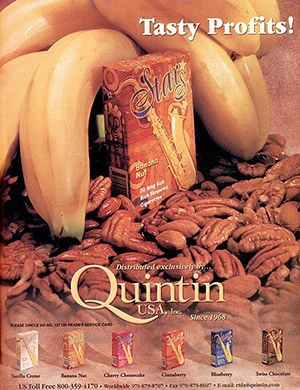
1. Candy- and Fruit-Flavored Products
Vanilla, cherry, chocolate, blueberry – even flavors from pop children's cereals. The use of flavors in cigarettes with the glaring exception of menthol cigarettes, was prohibited in 2009, but flavored cigars, e-cigarettes and other tobacco products are withal made and sold with candy and fruit flavorings. In April 2021, the Biden Administration announced that FDA will propose 2 rules to remove menthol cigarettes and flavored cigars from the marketplace, all the same no activeness has been taken.
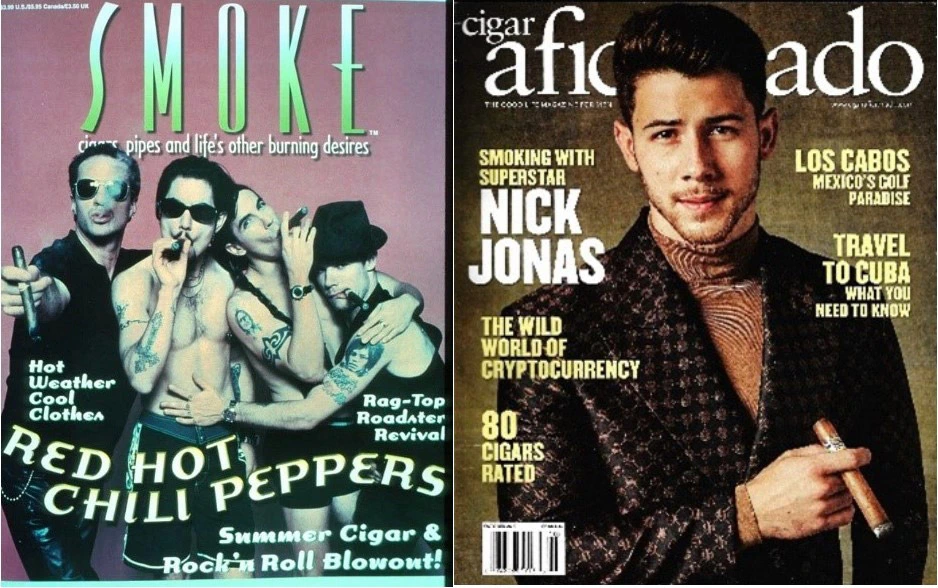
2. Celebrity Endorsements
Famous names and well-known faces have a lot of influence and it's no surprise a kid might want to be but like his or her favorite rock star.
3. Misleading Health Claims
The tobacco manufacture has promoted "low harm" versions of their products since day 1. However, light, low tar or filtered cigarettes are not any less unsafe. In fact, a federal gauge bedevilled the major tobacco companies on racketeering charges in part because they lied to the public with their wellness claims. The truth is that the risk of dying from smoking has increased over the last l years at the same time that most smokers switched to these "healthier" cigarette types.


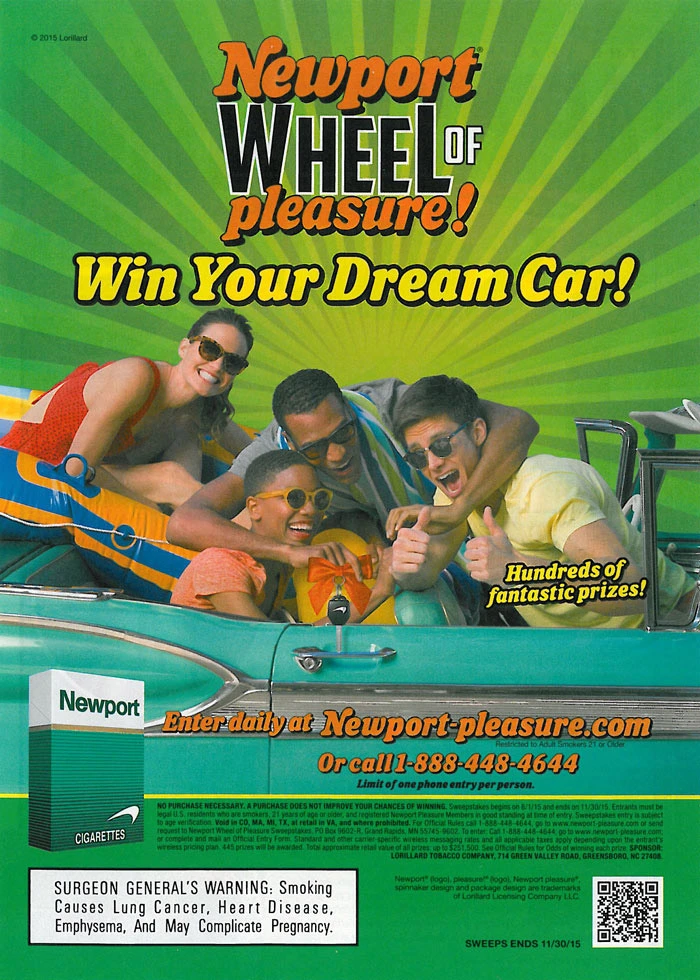
4. Smoking is Just a Game
The tobacco manufacture frequently uses sweepstakes and contests to get people hooked and keep the profits rolling in like this 2015/2016 Newport menthol cigarettes ad. However, smoking is anything just a game, ultimately killing upwards to half of long-term users.
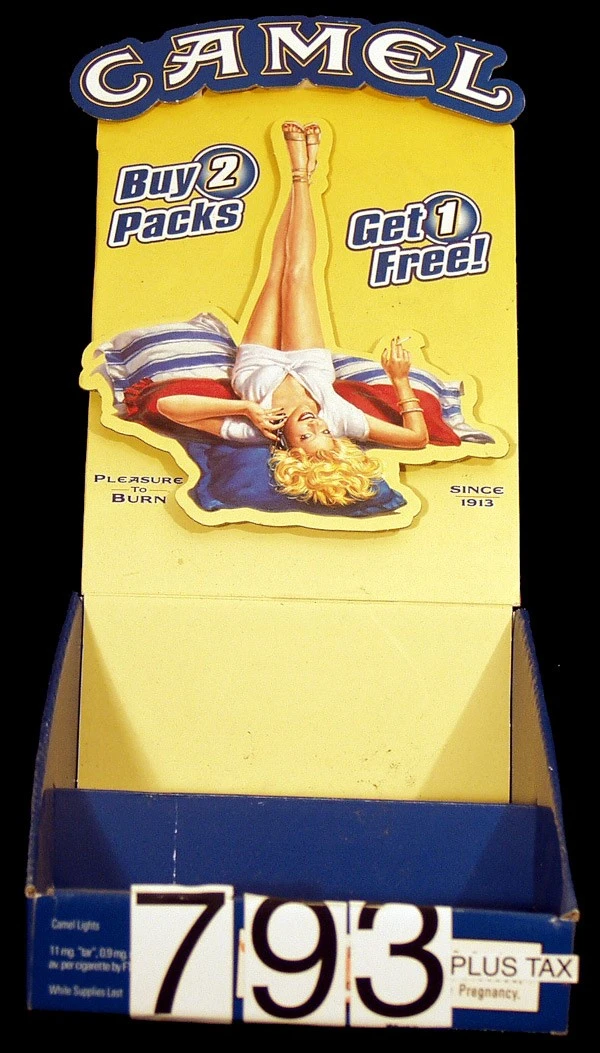
5. Purchase One, Get I Free
The toll of cigarettes has a very meaning event on youth smoking. Price discounts such as purchase 1, get one costless, are among the largest of the tobacco industry's marketing expenditures. Simply even if they are practically giving them away at present, the tobacco industry will recoup its money over the lifetime of kids newly addicted to their products.
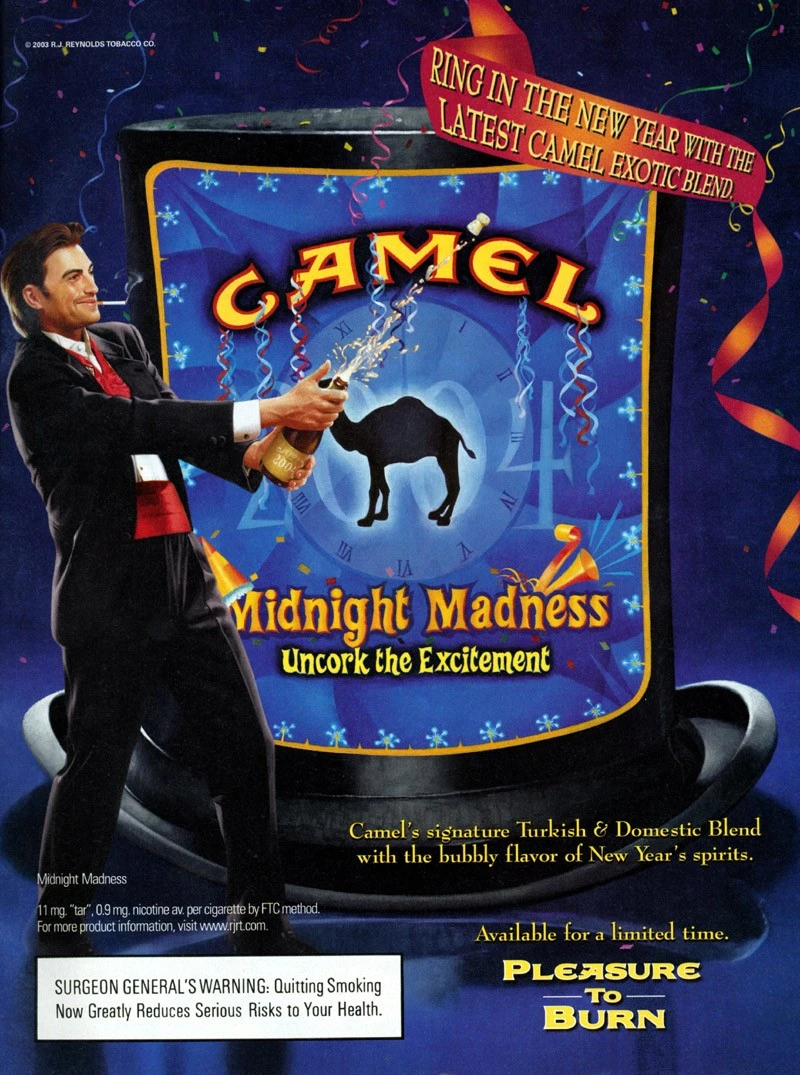
half-dozen. Ads in Popular Magazines
Found in the November 30, 2009 edition of Sports Illustrated
Big Tobacco pushes their message by placing ads—big ones—in magazines and publications that are popular with kids. The more exposure adolescents and teens have to tobacco ad, the more likely they are to get-go smoking.
vii. Product Placement on Idiot box and in Movies
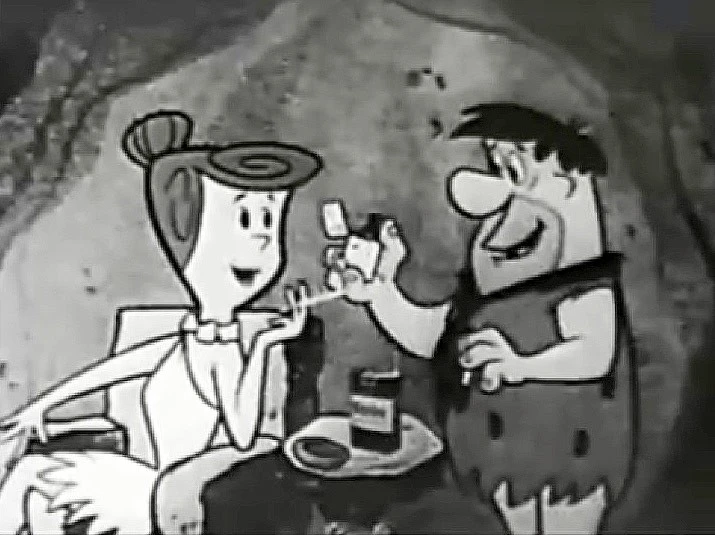
1962 Flintstones cartoon selling Winston's cigarettes
Saturday morning cartoons take been the staple of American childhoods for the by one-half century, just Large Tobacco has dingy fifty-fifty this innocent retentiveness – placing their products in cartoons, normalizing their appearance to kids.
eight. Cartoon Characters
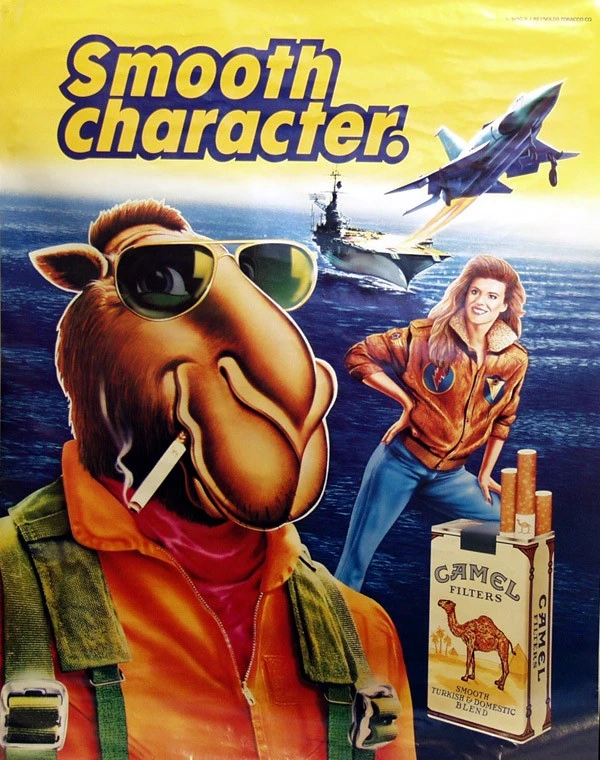
"Smoothen" cartoon characters such as Joe Camel were deployed to appeal to immature audiences at an impressionable age. I 1991 report found Joe Camel was at least equally well-known equally Mickey Mouse among 3- to 6-twelvemonth-olds. Cartoons became and so effective at addicting kids to tobacco, they were prohibited as part of the celebrated tobacco Main Settlement Agreement 46 states and the District of Columbia reached with the 5 largest tobacco companies in 1998.
9. In-store Promotions
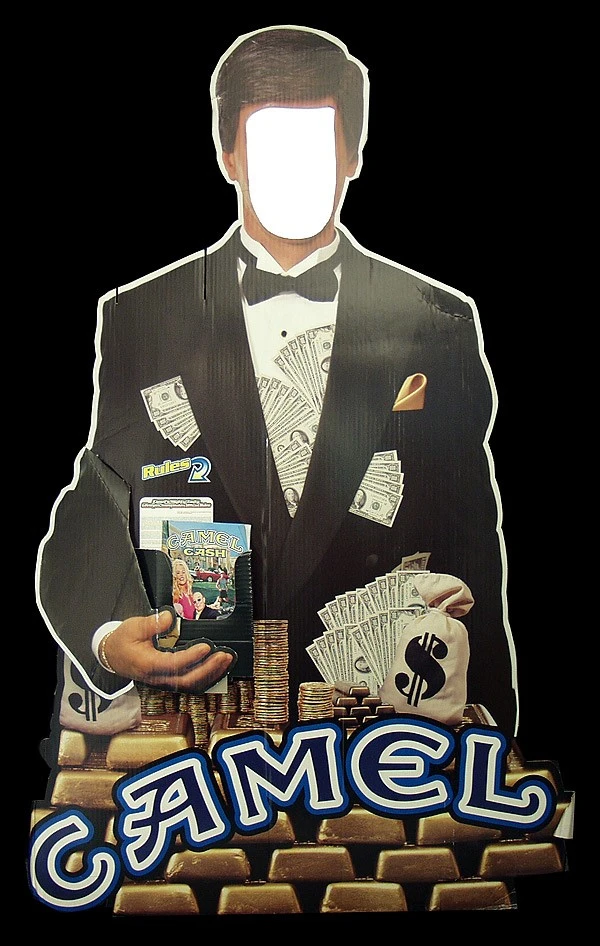
Tobacco advertisements and promotions are on display front, center and dorsum in convenience stores, gas stations and other retail locations frequented by youth, including some retailers with pharmacies. It'south non a coincidence that the average pinnacle of these advertisements is at the eye level of youth. The vast bulk of the industry's marketing dollars are spent in retail stores.
10. Replacement Smokers
Calling youth their "replacement smokers," tobacco companies callously and aggressively annunciate to youth, because they know they are killing their current customers. An infamous quote from one tobacco manufacture document gives insight on how they view recruitment:
"Younger adult smokers have been the critical gene in the growth and decline of every major brand and visitor over the last l years. They will continue to be just as important to brands/companies in the future for 2 simple reasons: The renewal of the market place stems nearly entirely from eighteen-year-old smokers. No more than than 5 per centum of smokers start afterward age 24. [And] the brand loyalty of 18-yr-former smokers far outweighs whatever trend to switch with age... Brands/companies which neglect to concenter their fair share of younger adult smokers face up an uphill battle. They must accomplish net switching gains every yr to only concord share... Younger adult smokers are the only source of replacement smokers... If younger adults plough away from smoking, the industry must decline, just equally a population which does non give nascence volition somewhen dwindle."February 29, 1984 RJR written report, "Young Adult Smokers: Strategies and Opportunities". Bates No. 501928462-8550

Folio final updated: January 26, 2022
godwinwerflefougs.blogspot.com
Source: https://www.lung.org/research/sotc/by-the-numbers/10-bad-things-to-entice-kids

Enregistrer un commentaire for "Will Newport Cigerettes Ever Do the Prize Thing Again"